Best Cloud Storage Strategies for Students and Businesses
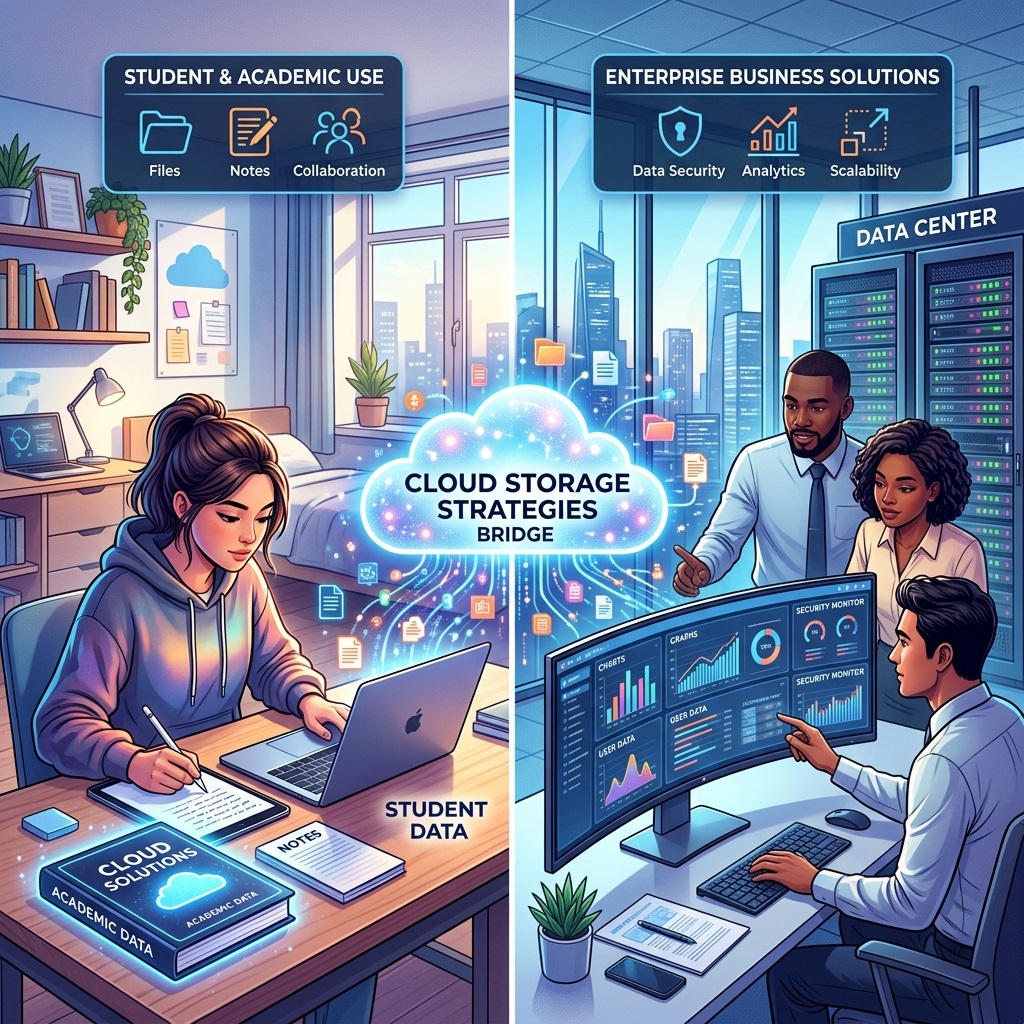
From budget-conscious students managing dynamic academic workloads to growing enterprises scaling secure file systems, choosing the right cloud storage strategy is critical. A modern cloud storage solution must adapt to your unique needs, whether that means keeping academic research organized on a budget or ensuring corporate IP remains locked behind enterprise-grade encryption.
Here are the most effective cloud storage strategies tailored specifically for students and growing businesses.
Smart Cloud Strategies for Students
As a student, balancing dynamic workloads, project deadlines, and a tight budget means you cannot afford complicated, high-cost storage tiers. You also cannot rely on a system that crashes when syncing large final assignments or video editing projects at the last minute.
1. Centralize Your Assets
The most common mistake students make is scattering their data. You might have notes in Google Drive, assignments in Dropbox, and photos stuck on iCloud. This fragmentation inevitably leads to lost files and missed deadlines.
The Strategy: Utilize a single, unified cloud repository to keep your research papers, media assets, and project code organized. By centralizing your files, you can use powerful global search tools to instantly find any document across all your courses. Creating dedicated top-level folders for each semester ensures your academic life remains streamlined.
2. Cross-Platform Accessibility
In today's academic environment, you are rarely working on a single device. You might take lecture notes on an Android tablet in class, write your essays on a Windows laptop in the library, and collaborate with peers via a web browser.
The Strategy: Look for services that integrate smoothly across all devices. Your files should sync seamlessly in the background without creating duplicate files or path conflicts. QuixiCloud’s native Windows and Android applications ensure that the PDF you annotated on your tablet is instantly available and updated on your laptop by the time you get back to your dorm.
3. Zero-Knowledge Document Protection
Academic research, personal identification documents, and sensitive financial aid information are prime targets for cyber threats. Standard free cloud providers routinely scan your files for advertising purposes and hold the encryption keys, meaning your privacy is never truly guaranteed.
The Strategy: Ensure your academic research and personal documents are locked behind hardware-level AES-256 encryption. By adopting a Zero-Knowledge architecture, you prevent unauthorized data scanning, sudden cloud service lockouts, and potential data breaches. Only you hold the key to your files.
Enterprise Cloud Strategies for Growing Businesses
For business infrastructure, managing files is no longer just about storage space—it requires strict security compliance, predictable budgeting, and robust developer flexibility. Growing businesses need solutions that scale intelligently.
1. Adopt Simplified Pricing Models
Legacy cloud giants (like AWS, Google Workspace, or Dropbox Business) trap scaling operations in complex, multi-tiered paywalls. They demand costly minimum-user upgrades or charge hidden egress fees just to access basic features and transfer data.
The Strategy: Shift your infrastructure to a transparent, flat single-tier plan format. A simplified pricing model allows CFOs and IT managers to easily forecast IT overhead without worrying about hidden bandwidth penalties or aggressive per-user licensing fees.
2. Secure Remote Workforces Natively
With remote and hybrid teams, distributing large files can become an operational nightmare. Forcing remote workers to download massive file repositories drains their local hardware storage and consumes massive amounts of company network bandwidth.
The Strategy: Deploy desktop clients that leverage native OS virtualization. By using "placeholder" cloud files that load strictly on-demand, remote employees can instantly browse and search vast corporate file hierarchies exactly as if they were stored locally. The actual file data is only streamed and cached when the employee opens the file, drastically reducing local SSD wear and bandwidth usage.
3. Implement Secure Automation
Businesses often rely on internal scripts, CRON jobs, or NAS (Network Attached Storage) units to handle automated off-site backups. Giving these automated systems your master password is a massive security risk.
The Strategy: Streamline your server and local backups by creating specialized access interfaces. Generate unique, secure 26-character passwords to safely mount directories over WebDAV. This allows you to securely connect external scripts, NAS systems (like Synology or TrueNAS), or internal workflows directly to your cloud without exposing your master account credentials. If a script is compromised, you simply revoke that specific WebDAV key.
4. Fortify Against Brute-Force Bot Attacks
As soon as a business exposes an endpoint to the internet, it is bombarded by automated bot attacks attempting brute-force password guessing or vulnerability scanning.
The Strategy: Ensure your company storage network is anchored by aggressive server-side protection. This includes strictly managed UFW firewall configurations and automated Fail2Ban parameters that instantly blacklist malicious IPs. By stopping these bot attacks at the edge, your off-site backups and sensitive corporate data remain highly secure and highly available.
Conclusion
Whether you are a student striving for academic excellence or a business scaling for the future, a strategic approach to cloud storage is your strongest asset. By centralizing data, demanding cross-platform sync, and refusing to compromise on Zero-Knowledge security and server protection, you can build a digital infrastructure that empowers your goals without draining your budget.
Written by QuixiCloud Team
The QuixiCloud Engineering Team is dedicated to building secure, scalable, and privacy-first cloud storage solutions.